










The Closers. The Crashers. The Deal Dominators.
What can a sales-led scouring of Proposify’s database of winning, failed, and sometimes forgotten deals expose? Everything you need to know to create, send, and close more proposals - and more revenue - faster. No fluff, no guesswork. These are the data-backed insights that you and your team can put into action - and win - with your very next opportunity.


The Truth About Proposals—Are You Leaving Money on the Table?
Proposals aren’t just a formality. They’re more than a price, a number, a place to sign. They’re masters of persuasion, your champion when you’re not in the room, your winning edge over the competition.
Here's the deal-breaker: too many sales teams treat proposals like an afterthought, leaving money on the table and your business ignored when it matters most.
Our research is undeniable: a strong proposal and a seamless process do more than improve close rates, they streamline your entire sales cycle, eliminate friction, improve your professional reputation, and set you up for bigger, faster wins.
The 2025 State of Proposals reveals:
- The roadblocks that slow teams down
- What the top performers are doing differently
- How to level up your proposals to close more deals effectively
These are your data-backed hacks to smarter selling. Apply them, and watch your proposals deliver more revenue, efficiency, and success—without adding extra work to your plate. You might even feel like you've added a superstar seller to your team.

Kyle Racki
CEO & Co-Founder

The Big Numbers
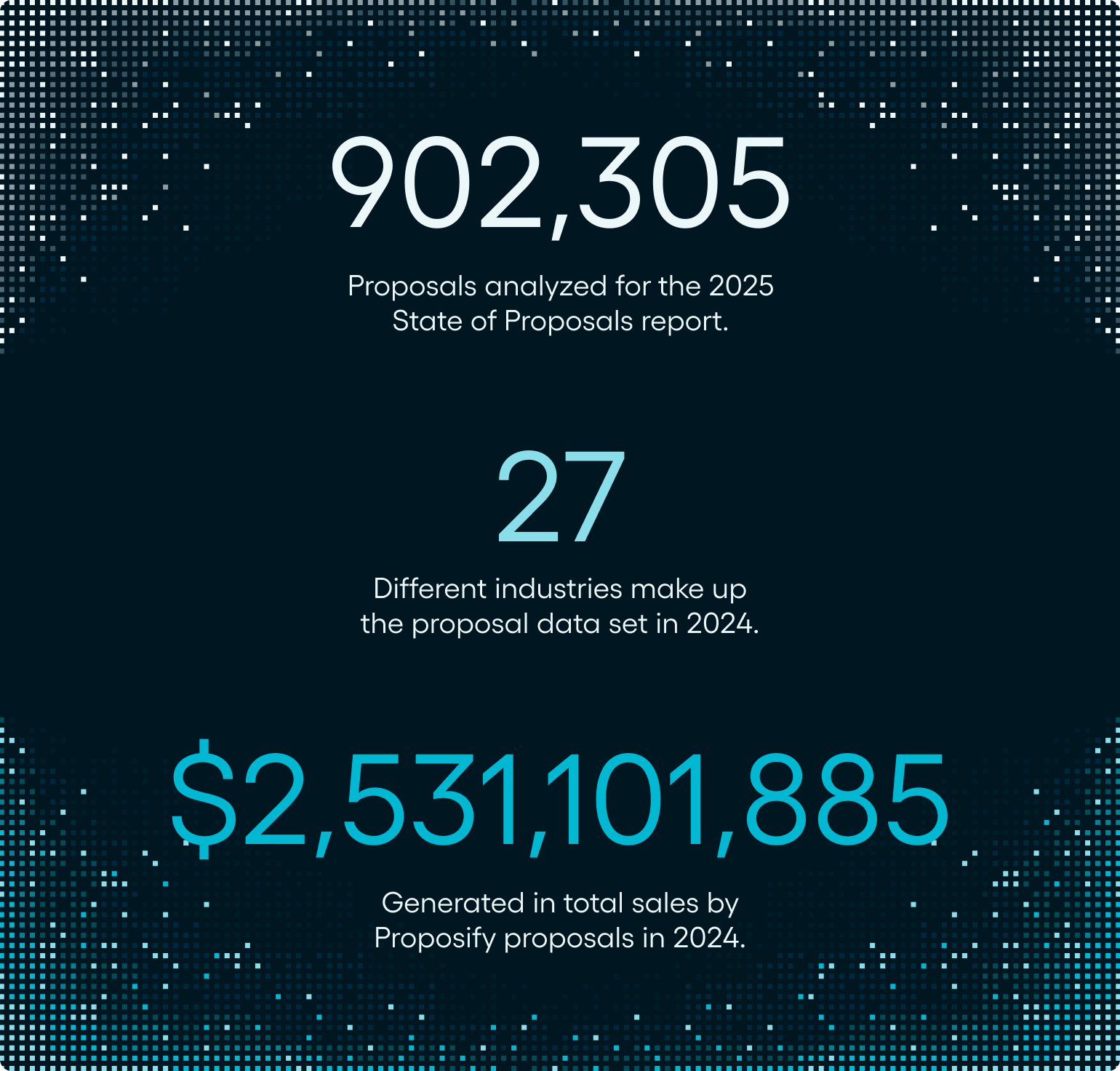
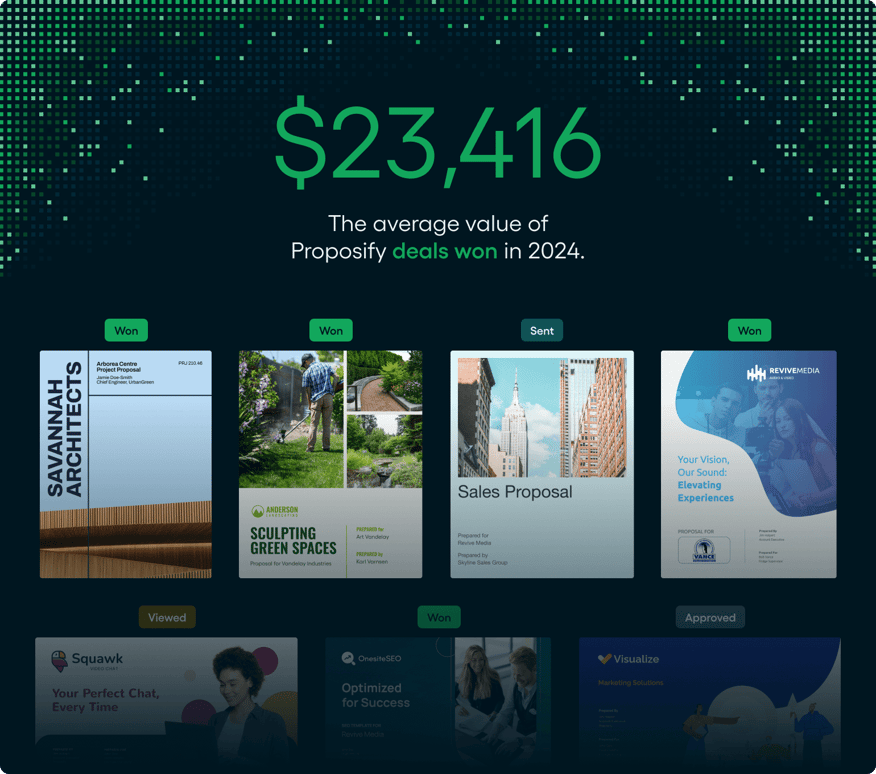
We’ve crunched the numbers at Proposify, and the insights are big. Here’s the standout data setting the stage for what’s inside the report—your high-level preview before we dig into the details.

Proposal Structure
A well-structured proposal isn’t just easier to read—it guides your prospect seamlessly from problem to solution. We break down the key elements that make proposals clear, compelling, and impossible to ignore.
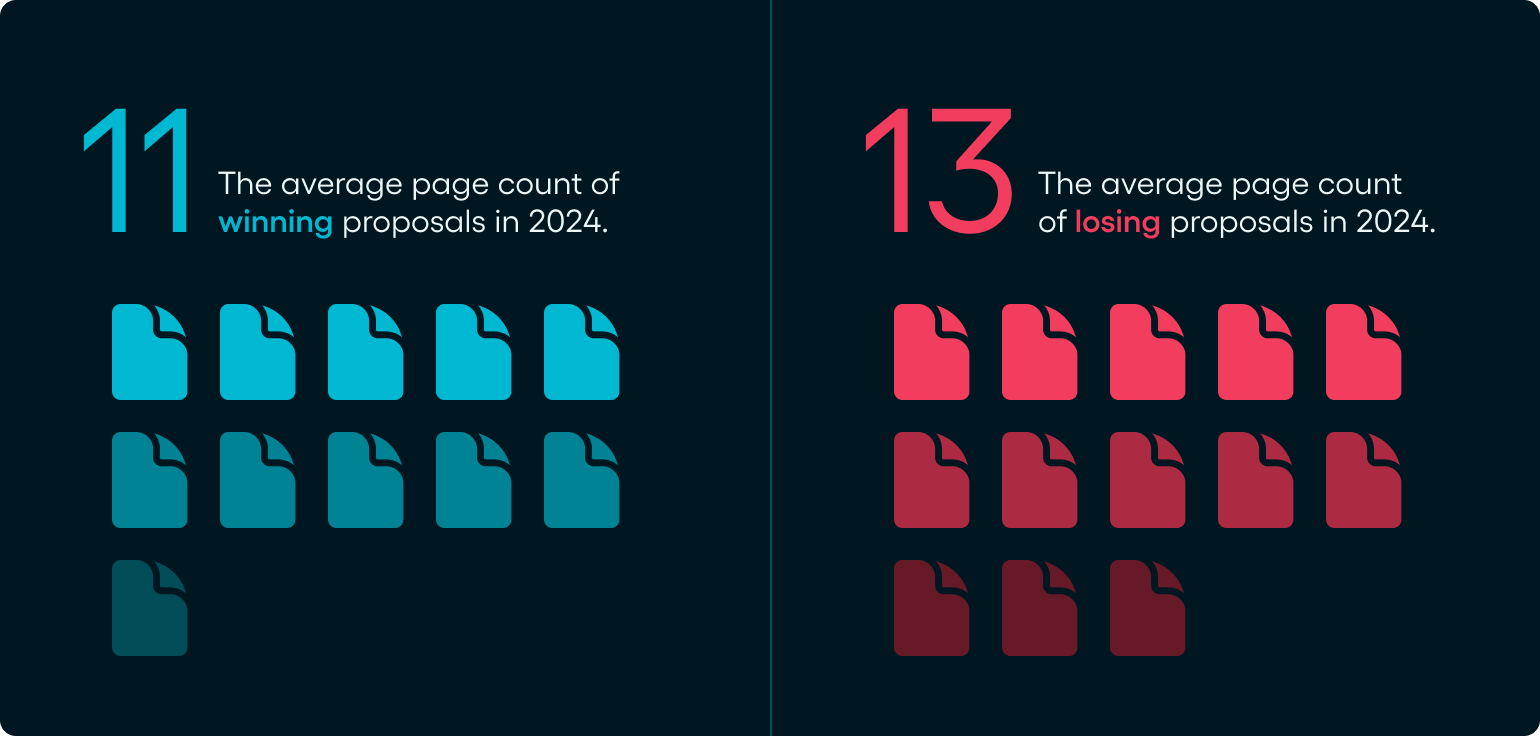
Page Count: Concise Closes Deals
There’s no one-size-fits-all length—it depends on the complexity, the deal size, and sales stage. The key is to kill the clutter and focus on what matters: how you solve their problem.
Sections: Where Buyers Actually Pay Attention
Not all proposal sections pull their weight. So which ones matter most? And how many do you actually need?
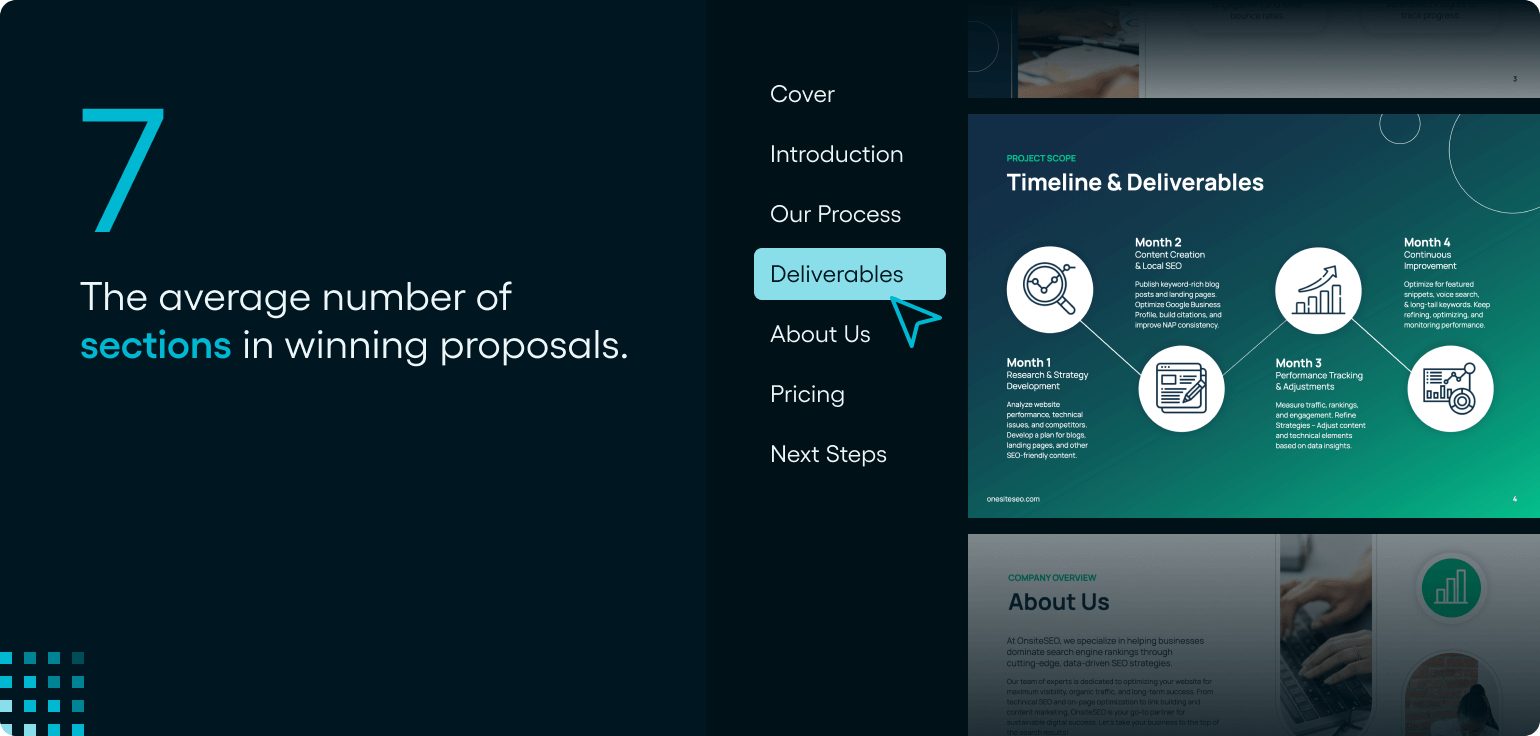
Most common sections in won proposals:
1. Cover Page
2. Executive Summary / Introduction / Project Summary
3. Approach / Solution / Our Process / Overview & Goals / Scope of Work
4. Deliverables / Products / Timeline
5. About Us / Our Team / Team Bios / Why Us?
6. Pricing / Your Investment / Fee Summary / Quote / Budget
7. Terms & Conditions / Sign Off / Next Steps / Acceptance
View Time by Section
Images: If Looks Could Close
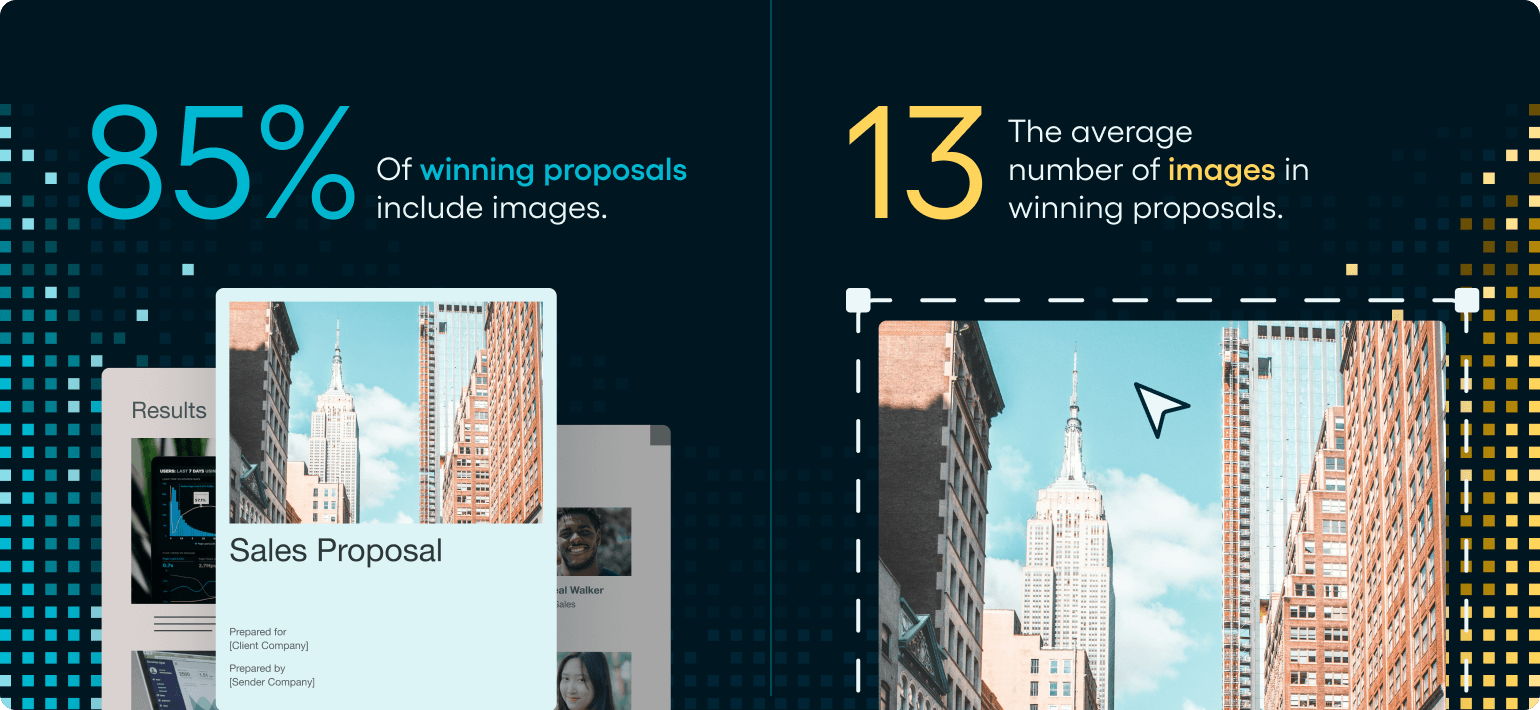
Proposals aren’t just about what you say—it’s about how you show it.
Visuals:
- Keep buyers engaged by breaking up text-heavy pages
- Make your brand look sharp with polished, professional design
- Show (off), don’t just tell—let headshots, product shots, and portfolios do the selling
Video in Proposals: Sell When You're Not in the Room
Most proposals get passed around your prospect's buying committee—but you’re not always there to pitch.
Only 23% of proposals include video, yet sellers who use it see higher engagement rates.
Why? Because video:
Puts you in the room even when you’re not
Speaks directly to key decision-makers who never joined the sales call
Makes your pitch more engaging, memorable, and persuasive
A short, strategic video—whether it’s a personal intro, a product demo, or a client testimonial—can be the difference between ‘Let’s go’ and ‘Let’s think about it.’
Interactive Pricing Tables: Let Buyers Build Bigger Deals
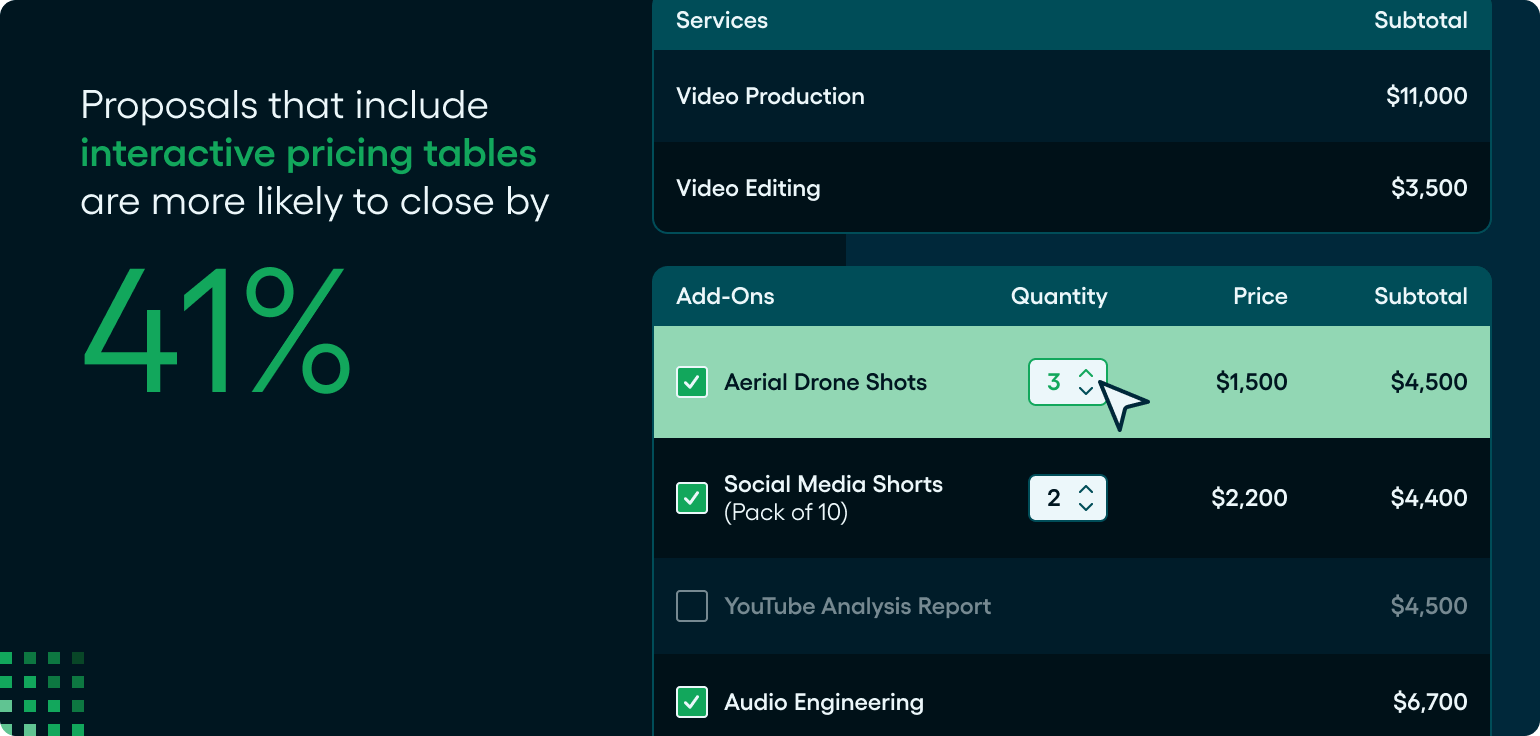
By incorporating editable quantities and optional rows, your prospects gain more control over their purchase, allowing them to:
- Adjust quantities to fit their budget
- Add or remove features based on their needs
- Select upsell & cross-sell opportunities
- See real-time pricing changes, eliminating back-and-forth
This flexibility not only increases their confidence but also boosts deal size—buyers are more likely to opt into upgrades and additional services when they can customize their package upfront.
Giving buyers control over pricing makes it easier for them to say “yes.”
Smart Forms, Smoother Deals
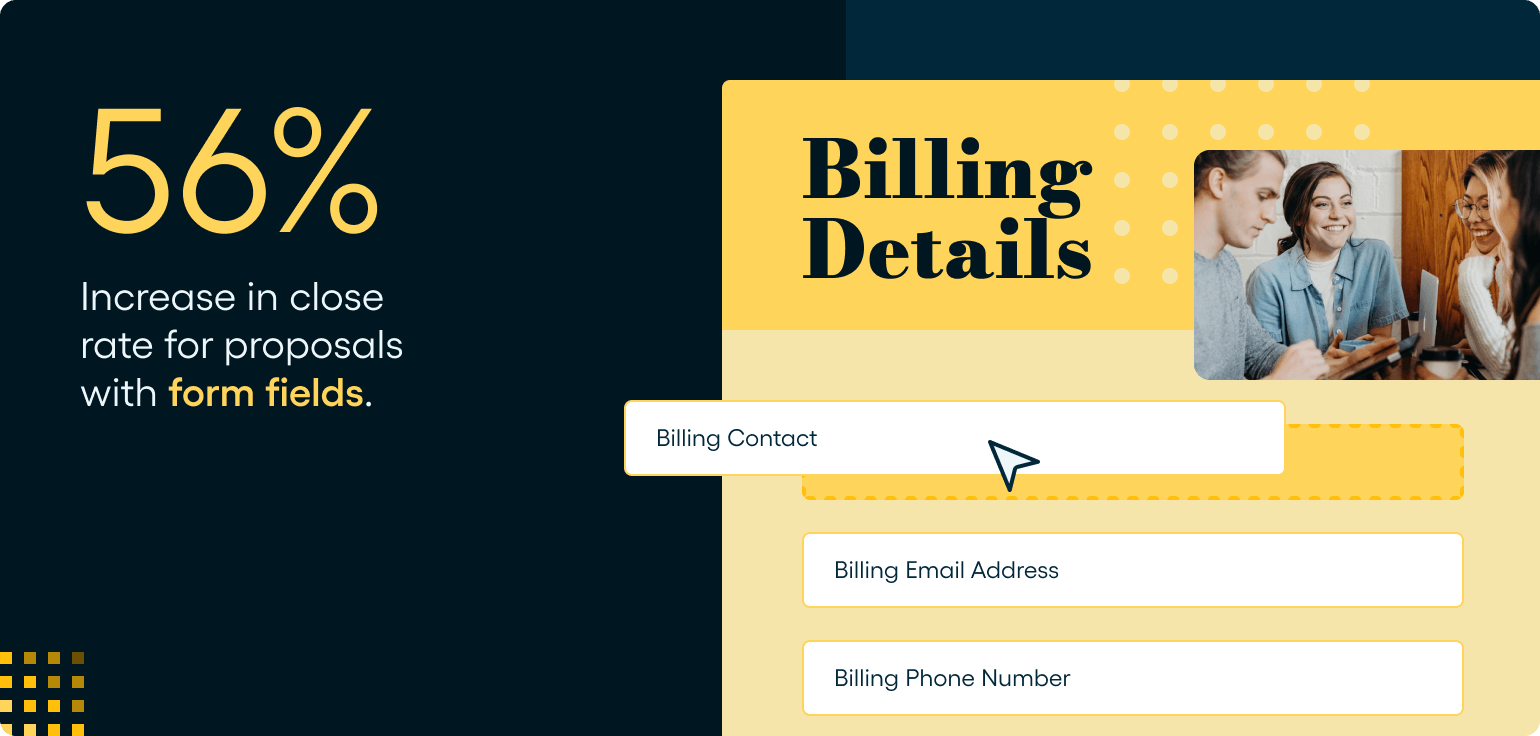
Adding fields for contact details, billing information, project specifics, and key roles keeps buyers engaged and eliminates unnecessary back-and-forth.
You’ll need this info in your CRM anyway—why not capture it upfront and make closing and project kick-off seamless for everyone?
Take the 2025 State of Proposals Report with you.
Put ideas into action to 2X your close rate by grabbing our downloadable version of the 2025 State of Proposals Report.
Data and insights from over 900,000 proposals – what more could you ask for?


THE PROPOSAL JOURNEY
From creation to close, the faster a proposal gets to a prospect, that faster the deal gets done. Is your team lagging behind?
17minutes
Average time to create a proposal.

 Proposal Created


75minutes
Average time from when the proposal is sent until prospect opens it.

 Proposal Viewed


2days
Average time from first open to deal closed.

 Proposal Closed

Closing the Deal
Winning the deal doesn’t stop at “send.” The right strategies keep momentum high, reduce friction, and increase your chances of closing.
Proposal Views: The Clues to Closing
Not tracking proposal views? You’re missing key signals that can make or break a deal.
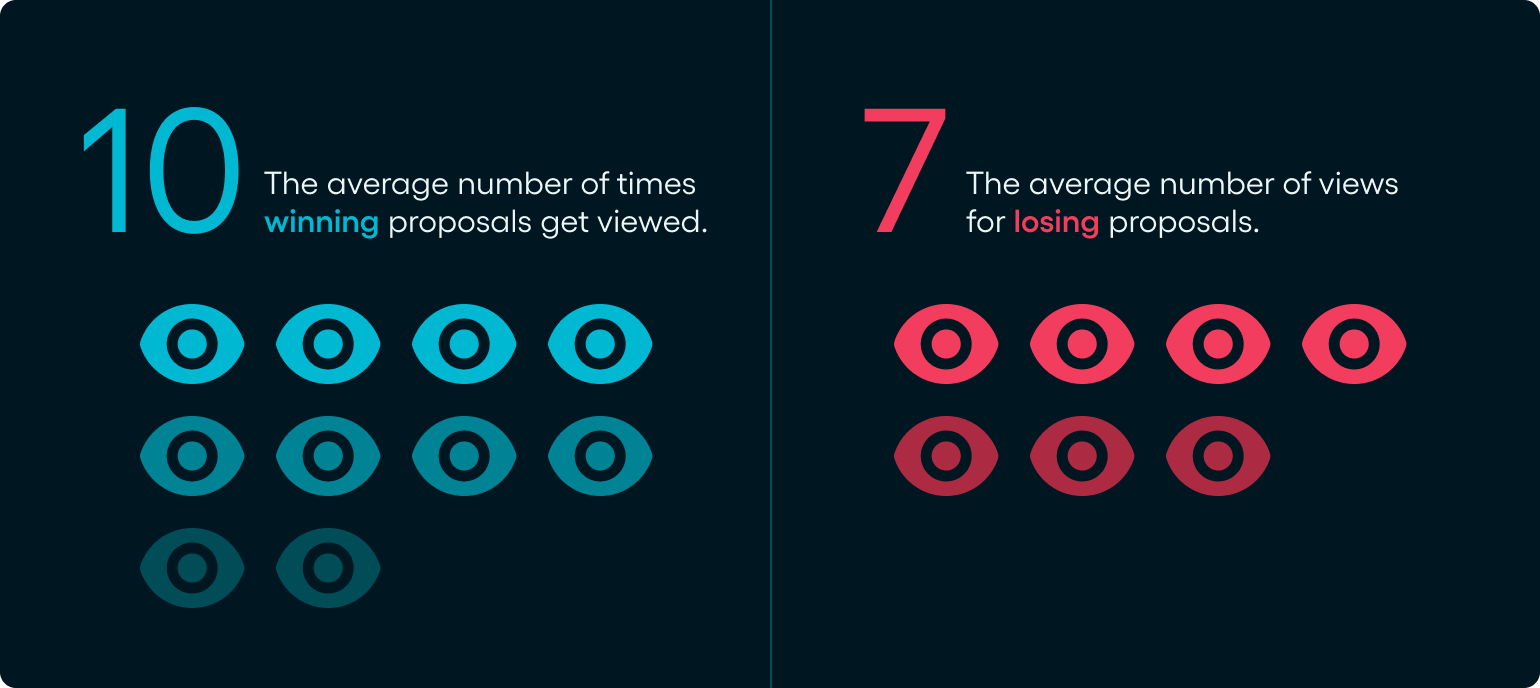
Too few views? Your prospect might be disengaged—reach out and re-align.
Higher-than-average views? Someone’s digging in—check if they have questions or need adjustments.
Your proposal isn’t just sitting there—it’s sending signals. Are you listening?
Multi-thread or Miss Out
Selling to a single decision-maker is risky—deals can stall or die in isolation.
The data is clear: when more than one stakeholder views a proposal, close rates DOUBLE.
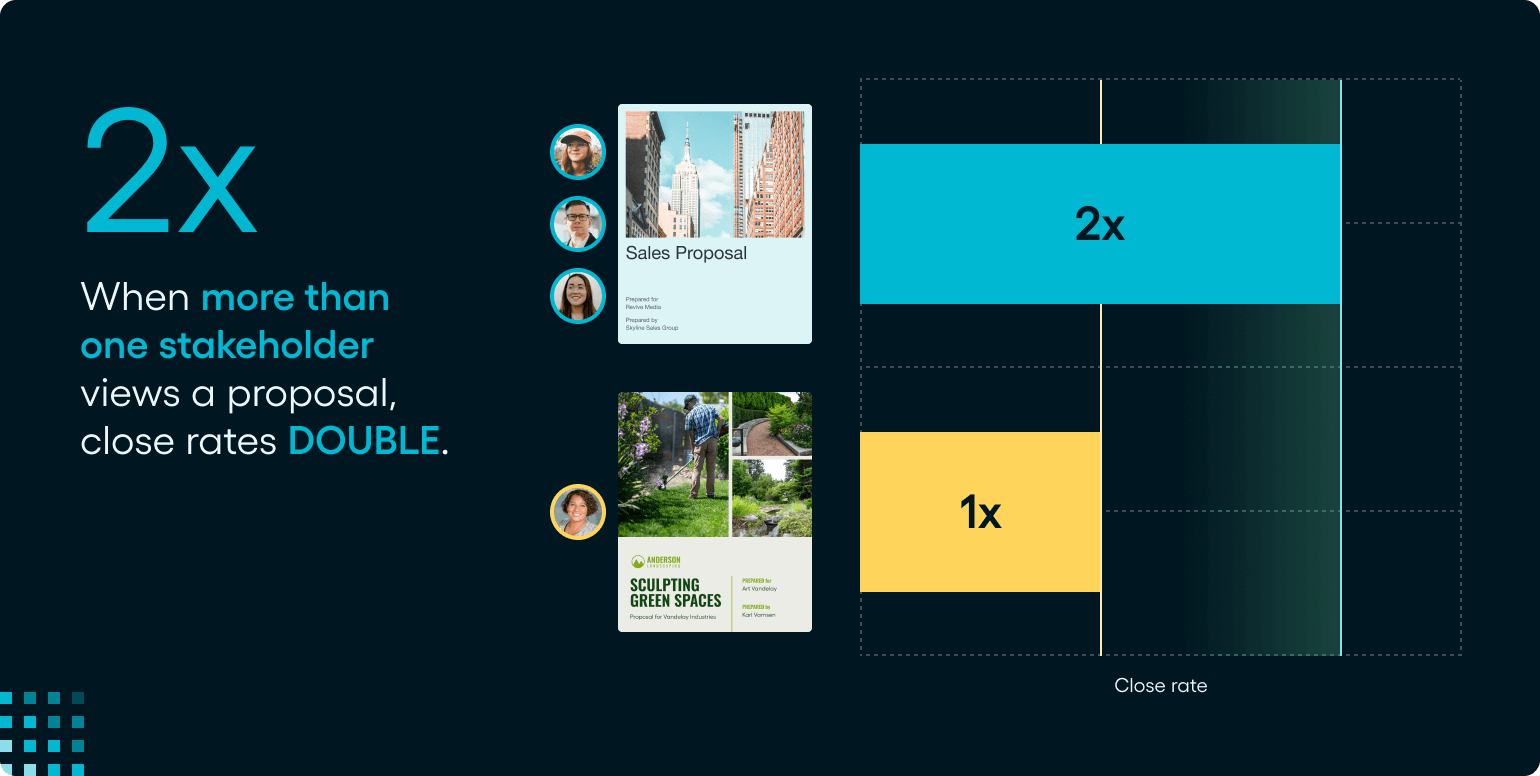
Yet, most proposals are only sent to one person.
Multi-threading your deals and engaging multiple stakeholders early helps build momentum by:
- Aligning the team on the problem you’re solving
- Creating internal champions who help sell the deal for you
- Reducing the risk of a single point of failure
Automatic Reminders: Fortune is in the Follow-up
Prospects are busy. You're busy. People get distracted. Sometimes, they just forget. Setting up automatic reminders keeps your proposal top of mind without you having to chase every deal manually.
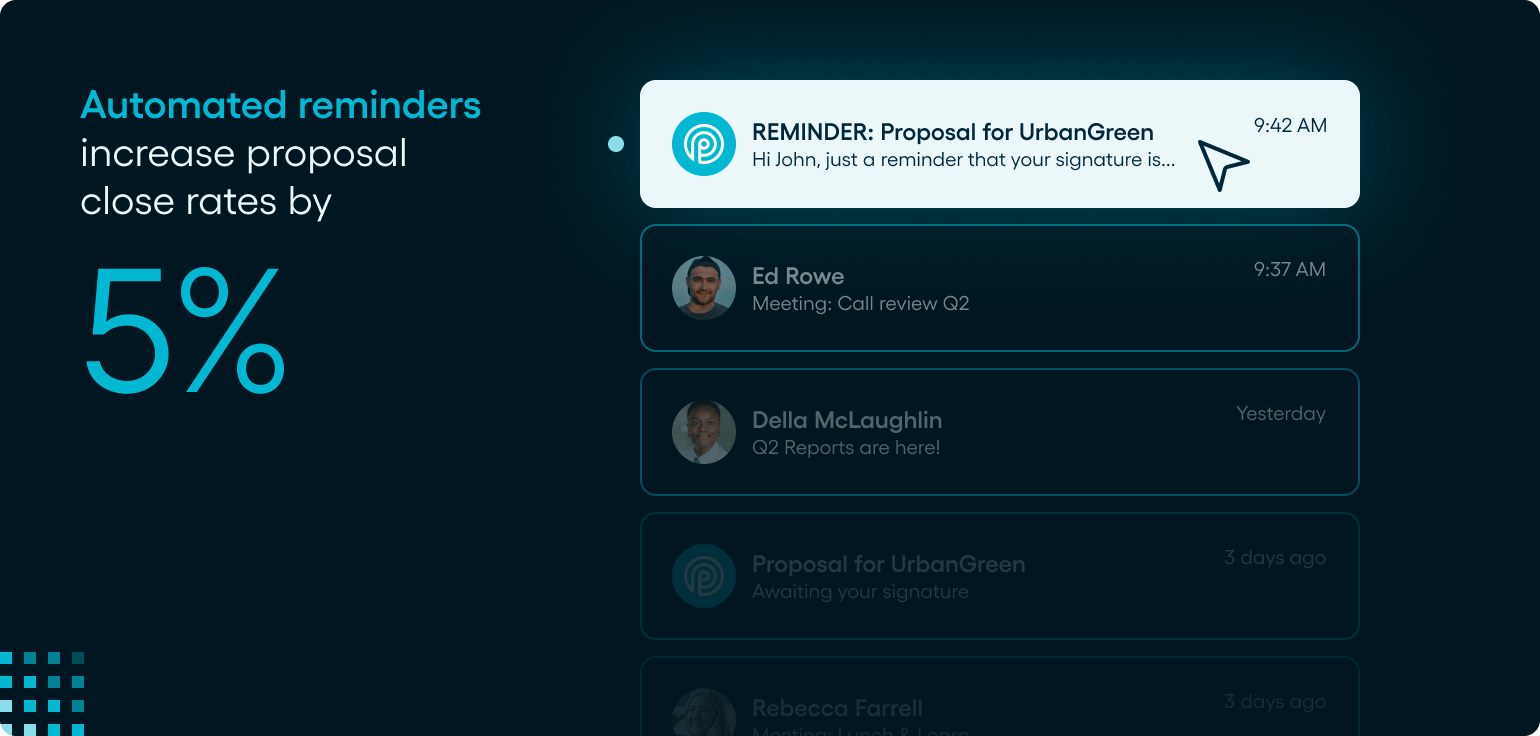
After 1 day:
No open? The system reminds them.
After 2 days:
No response? A gentle nudge goes out.
If views stall at 7 days:
They’re stuck—time to step in.
A well-timed reminder isn’t just a follow-up—it’s a deal saver. Automate your nudges, keep deals moving, and never let an opportunity slip away.
Revisions: A Few Edits Away from a Win
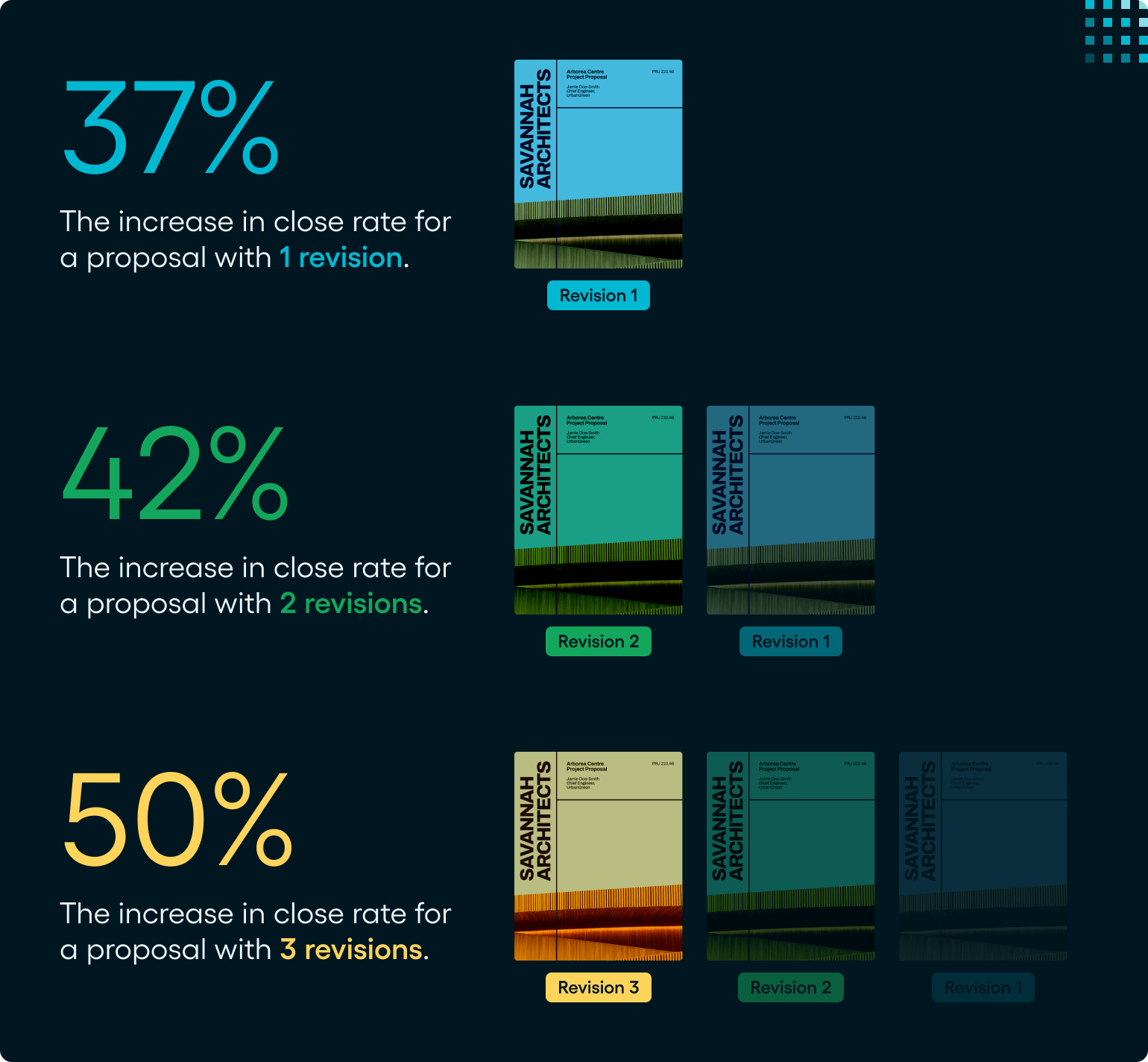
If your prospect asks you to revise the proposal, it's not a bad thing—it's a sign you've entered the negotiation phase and you're one step closer to the close. Proposals that get revised have a higher close rate.
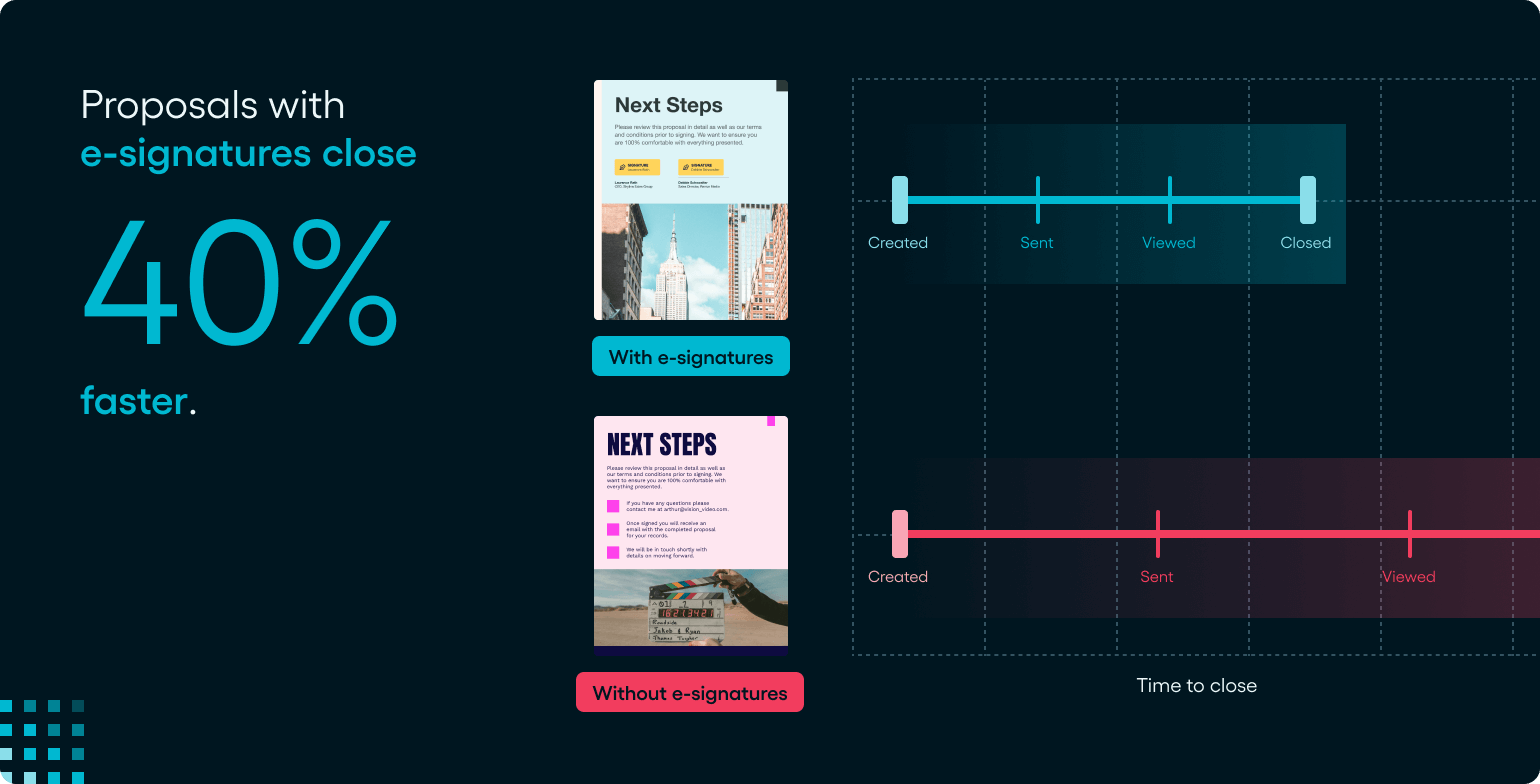
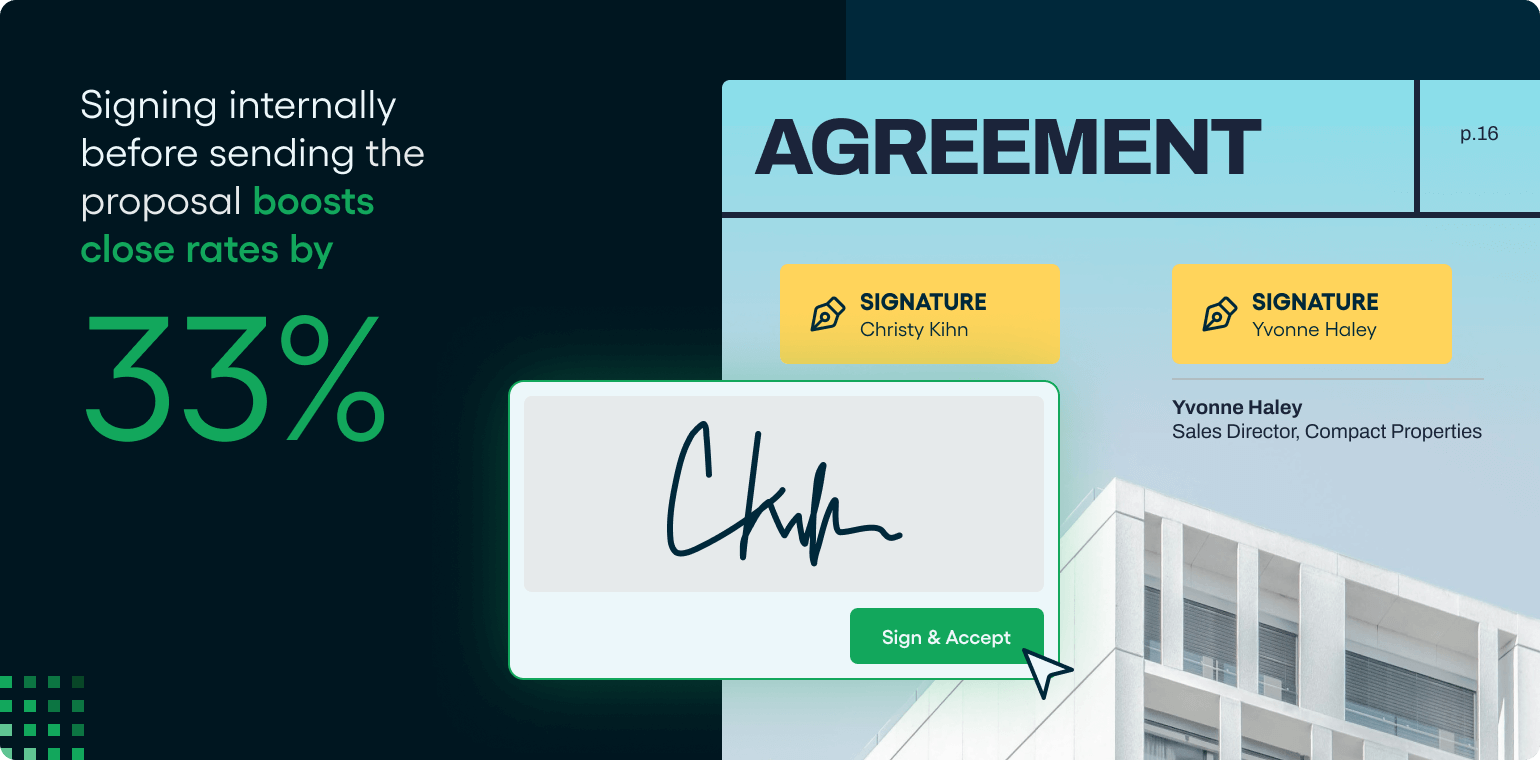
E-signatures: A Good Sign
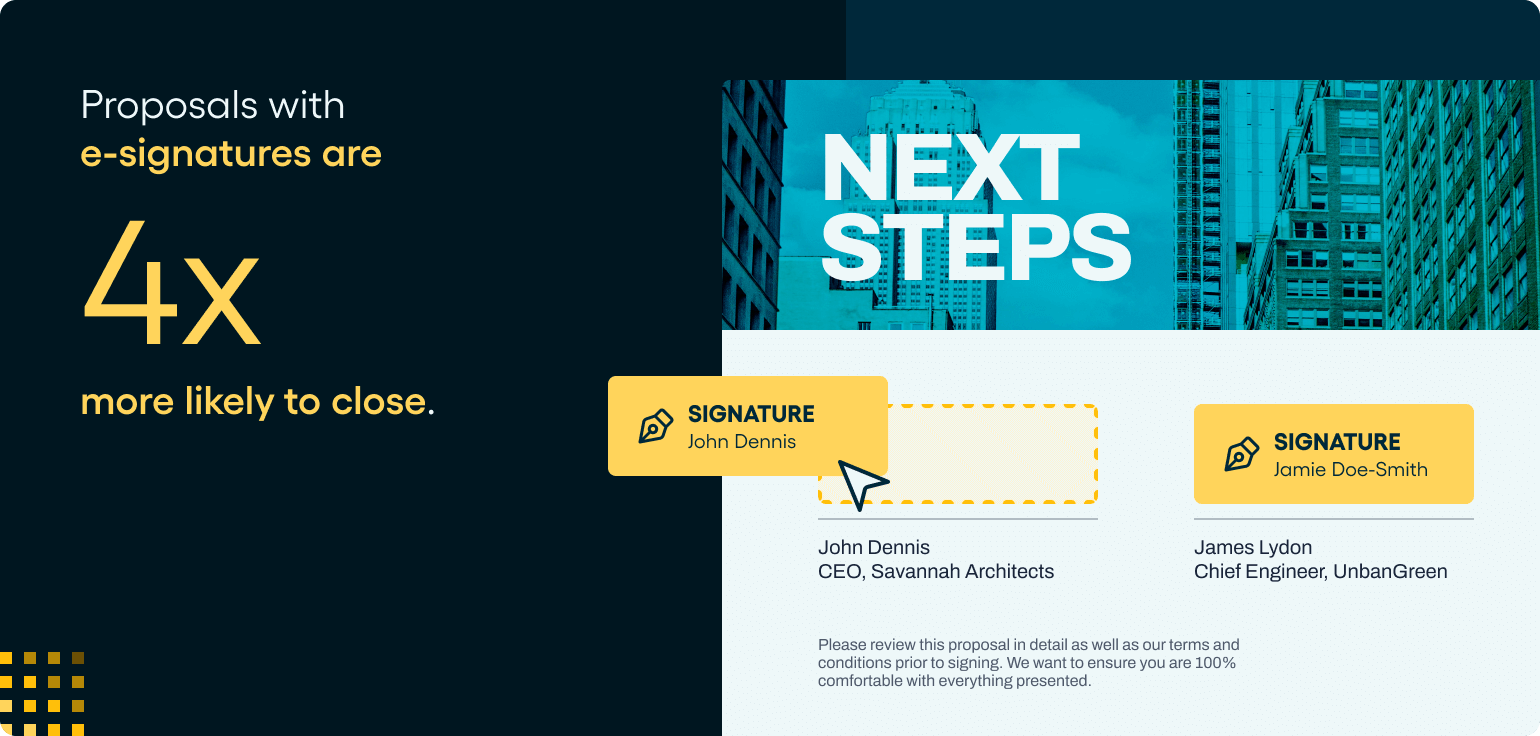
If your closing process still involves printing, signing, scanning, and emailing, it might have worked in the '90s, but in 2025, it’s costing you deals.
E-signatures remove friction, speed up approvals, and turn hesitation into action—so you and your buyer can get down to business faster.
Take the 2025 State of Proposals Report with you.
Put ideas into action to 2X your close rate by grabbing our downloadable version of the 2025 State of Proposals Report.
Data and insights from over 900,000 proposals – what more could you ask for?
Close Rate by Industry - How does your close rate compare?
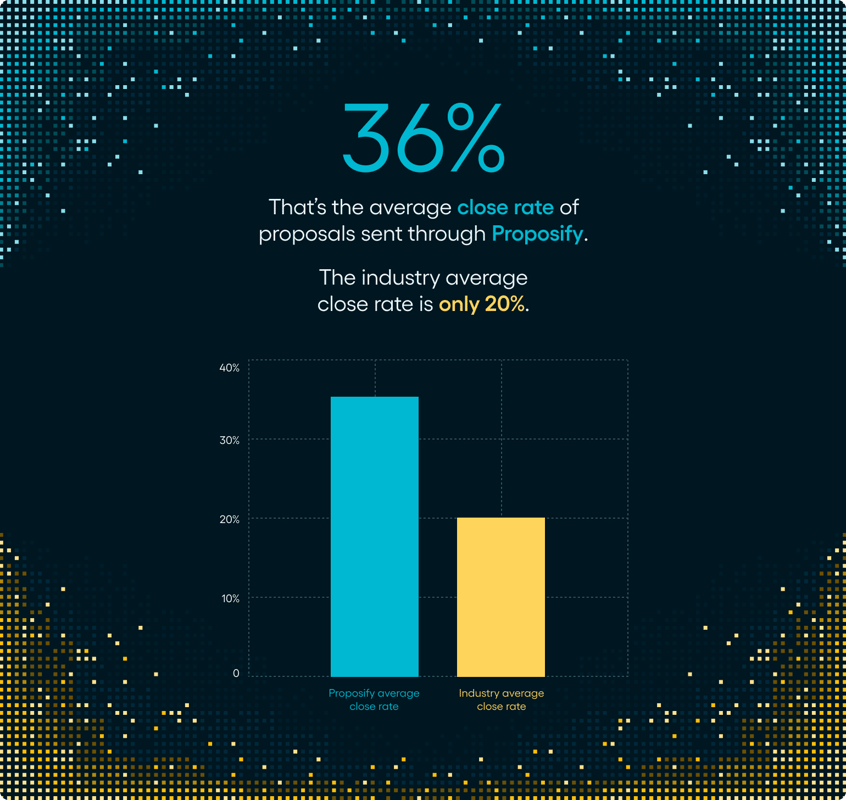
While Proposify users enjoy an impressive 36% average close rate overall, we've discovered that number can swing dramatically depending on your industry and deal size. In fact, some industries are seeing close rates up to 3X higher than the average!
Hover over the graph below to see how different industries are performing - that's the percentage of sent proposals that turn into actual wins.
Close rate by company size: Does size matter?
We were curious if bigger really is better when it comes to closing deals. Turns out, company size does impact close rates—but not always in the way you might expect.
Time to Close - How fast are deals moving in your industry?
Speed matters in closing deals, but what's "fast" in consulting might be glacial in tech. We analyzed how quickly proposals turn into signed deals across industries - is your sales cycle dragging compared to your competition?
Deal value by company size - Are you leaving money on the table?
Wonder how the size of your deals stack up against similar-sized organizations? Finding your spot on this chart helps set realistic expectations for your proposals.
But don't be limited by these averages! Throughout this report, we highlight strategies used by companies that consistently secure deals well above their size bracket's typical range. Understanding these benchmarks is your first step toward exceeding them.
The Next Deal is Yours to Close
Now that you've joined the Proposal Enlightened, the question becomes: what one thing will you improve tomorrow?
Even implementing a single insight from this report—whether it's interactive pricing, automated reminders, or multi-threading your deals—can dramatically transform your results.
The most successful teams don't just consume these insights—they act on them.
At Proposify, we've built every winning strategy in this report directly into our platform. Why reinvent the wheel when thousands of sales teams are already using these tactics to outperform their competition?
Your next proposal could be your best-performing one yet.
Cheering you on,
The Proposify Team
P.S. True enlightenment isn't just knowledge—it's putting that knowledge into practice. We're here to help with that part, too.